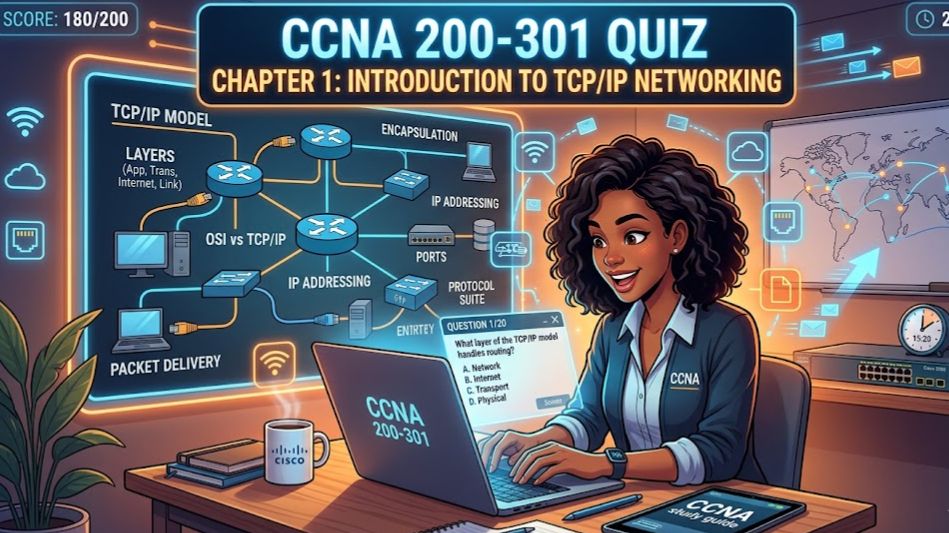
CISCO CCNA 200-301 - Chapter 1: Introduction to TCP/IP Networking
AvancéInformatique
0 essai
0.0(0)
0 essai•il y a 4 mois
Welcome to the first chapter in your study for CCNA! This chapter begins Part I, which
focuses on the basics of networking.
Networks work correctly because the various devices and software follow the rules. Those
rules come in the form of standards and protocols, which are agreements of a particular
part of how a network should work. However, the sheer number of standards and protocols
available can make it difficult for the average network engineer to think about and work
with networks—so the world of networking has used several networking models over time.
Networking models define a structure and different categories (layers) of standards and protocols.
As new standards and protocols emerge over time, networkers can think of those new
details in the context of a working model.
You can think of a networking model as you think of a set of architectural plans for building
a house. A lot of different people work on building your house, such as framers, electricians,
bricklayers, painters, and so on. The blueprint helps ensure that all the different pieces of the
house work together as a whole. Similarly, the people who make networking products, and
the people who use those products to build their own computer networks, follow a particular
networking model. That networking model defines rules about how each part of the network
should work, as well as how the parts should work together so that the entire network functions
correctly.
Today, TCP/IP rules as the most pervasive networking model in use. You can find support for
TCP/IP on practically every computer operating system (OS) in existence today, from mobile
phones to mainframe computers. Every network built using Cisco products today supports
TCP/IP. And not surprisingly, the CCNA exam focuses heavily on TCP/IP. This chapter uses
TCP/IP for one of its main purposes: to present various concepts about networking using the
context of the different roles and functions in the TCP/IP model.
focuses on the basics of networking.
Networks work correctly because the various devices and software follow the rules. Those
rules come in the form of standards and protocols, which are agreements of a particular
part of how a network should work. However, the sheer number of standards and protocols
available can make it difficult for the average network engineer to think about and work
with networks—so the world of networking has used several networking models over time.
Networking models define a structure and different categories (layers) of standards and protocols.
As new standards and protocols emerge over time, networkers can think of those new
details in the context of a working model.
You can think of a networking model as you think of a set of architectural plans for building
a house. A lot of different people work on building your house, such as framers, electricians,
bricklayers, painters, and so on. The blueprint helps ensure that all the different pieces of the
house work together as a whole. Similarly, the people who make networking products, and
the people who use those products to build their own computer networks, follow a particular
networking model. That networking model defines rules about how each part of the network
should work, as well as how the parts should work together so that the entire network functions
correctly.
Today, TCP/IP rules as the most pervasive networking model in use. You can find support for
TCP/IP on practically every computer operating system (OS) in existence today, from mobile
phones to mainframe computers. Every network built using Cisco products today supports
TCP/IP. And not surprisingly, the CCNA exam focuses heavily on TCP/IP. This chapter uses
TCP/IP for one of its main purposes: to present various concepts about networking using the
context of the different roles and functions in the TCP/IP model.
7m 0.0s
7
60%
Illimité
IntermédiaireInformatique
0.0

Plongez au cœur de l'infrastructure numérique avec notre quiz interactif dédié aux fondamentaux des réseaux et de la sécurité informatique. Que vous soyez étudiant en informatique ou passionné de tech, ce test évalue vos connaissances sur les protocoles essentiels tels que le modèle TCP/IP, le fonctionnement du DNS et la sécurisation des échanges via HTTP/HTTPS.
À l'heure où la cyber-résilience est une priorité, comprendre comment les données circulent sur Internet est crucial. Ce quiz couvre les couches du modèle OSI, la gestion des adresses IP et les mécanismes de défense contre les vulnérabilités réseau. Testez votre niveau intermédiaire, apprenez grâce aux explications détaillées et optimisez vos compétences pour réussir vos certifications ou vos projets professionnels. Un outil indispensable pour valider votre expertise en architecture réseau et protocoles de communication.
À l'heure où la cyber-résilience est une priorité, comprendre comment les données circulent sur Internet est crucial. Ce quiz couvre les couches du modèle OSI, la gestion des adresses IP et les mécanismes de défense contre les vulnérabilités réseau. Testez votre niveau intermédiaire, apprenez grâce aux explications détaillées et optimisez vos compétences pour réussir vos certifications ou vos projets professionnels. Un outil indispensable pour valider votre expertise en architecture réseau et protocoles de communication.

9 essai(s) il y a 7 mois
10
IntermédiaireInformatique
0.0
Propulsez vos compétences techniques avec notre quiz interactif dédié aux bases de données relationnelles et au langage SQL. Que vous prépariez un examen d'informatique ou que vous souhaitiez valider vos acquis en développement backend, ce test couvre les piliers fondamentaux : de la modélisation conceptuelle des données (MCD) à l'optimisation des requêtes complexes.
Apprenez à structurer des schémas efficaces, à manipuler les clés primaires et étrangères, et à maîtriser les jointures (INNER JOIN, LEFT JOIN) pour extraire des informations pertinentes. Ce quiz explore également les formes normales pour éviter la redondance et garantir l'intégrité des données via les propriétés ACID. Relevez le défi et atteignez le niveau expert en gestion de bases de données !
Apprenez à structurer des schémas efficaces, à manipuler les clés primaires et étrangères, et à maîtriser les jointures (INNER JOIN, LEFT JOIN) pour extraire des informations pertinentes. Ce quiz explore également les formes normales pour éviter la redondance et garantir l'intégrité des données via les propriétés ACID. Relevez le défi et atteignez le niveau expert en gestion de bases de données !
6 essai(s) il y a 7 mois
10
IntermédiaireInformatique
0.0
Explorez les coulisses de vos machines avec notre quiz avancé sur les systèmes d’exploitation (OS). Ce test de niveau intermédiaire est conçu pour les étudiants en informatique et les administrateurs système souhaitant valider leurs compétences sur les architectures Linux et Windows. Nous abordons des concepts critiques tels que la gestion des processus, l'ordonnancement, et la hiérarchie de la mémoire vive (RAM).
Comprenez les différences fondamentales entre le Noyau (Kernel) monolithique et micro-noyau, ainsi que les systèmes de fichiers comme NTFS et ext4. Que vous soyez adepte de la ligne de commande (CLI) ou de l'interface graphique (GUI), ce quiz vous aide à maîtriser les permissions, la mémoire virtuelle et la sécurité des accès.
Comprenez les différences fondamentales entre le Noyau (Kernel) monolithique et micro-noyau, ainsi que les systèmes de fichiers comme NTFS et ext4. Que vous soyez adepte de la ligne de commande (CLI) ou de l'interface graphique (GUI), ce quiz vous aide à maîtriser les permissions, la mémoire virtuelle et la sécurité des accès.
7 essai(s) il y a 7 mois
10
Commentaires (0)
Connectez-vous pour commenter
Cliquez ici pour vous connecter